Volunteer Spotlight: Lisa Rebane
By Laura Schober
Lisa Rebane was 18 when she first noticed a small round patch of hair loss on her scalp. After seeing her doctor, she was diagnosed with alopecia areata and referred to a dermatologist to discuss treatment options. At first, Lisa was able to conceal the patches underneath her long hair, but as the disease progressed, she turned to corticosteroid injections, hoping to stay one step ahead. But even with medication, the patches eventually grew bigger.
About 10 years ago, Lisa’s condition progressed to alopecia totalis, resulting in the loss of all hair on her scalp. Not yet ready to accept or discuss her condition with others, she began wearing wigs and revealed her diagnosis only to family and a few close friends. Over time, Lisa wanted to become more involved in the community, so she reached out to CANAAF to explore volunteer opportunities and to connect with others facing the same diagnosis.
Now in her late 30s and serving as a board member and volunteer at CANAAF, Lisa is committed to supporting those with alopecia areata as they navigate the challenges of the autoimmune disease.
“I used to feel a lot of isolation and shame surrounding the diagnosis,” said Lisa, a clinical research professional who lives in Vancouver. ”It’s an unpredictable autoimmune disease. For a long time, I was trying to control it and thought, ‘Oh, it’ll grow back’, or I hoped the medication would work. I think letting go and accepting it – and finding other people I could talk to and look up to – was a big part of my growth.”
After connecting with the CANAAF community, Lisa began fundraising and sharing educational content on social media to increase awareness and understanding of alopecia areata.
As her confidence grew, so did her involvement. In 2022, Lisa became a CANAAF mentor, offering guidance and empathy to others navigating their own diagnoses. The following year, she wrote a blog post for the British Columbia Medical Journal’s website, which described the emotional toll and financial burden of alopecia areata.
In 2025, Lisa joined CANAAF’s Board of Directors as the National Support Coordinator, where she oversees and works to expand the support network across Canada. She is involved in onboarding new support group leaders and mentors, and is helping to organize CANAAF’s annual Come Together conference, which will take place from July 17-19, 2026 in Toronto.
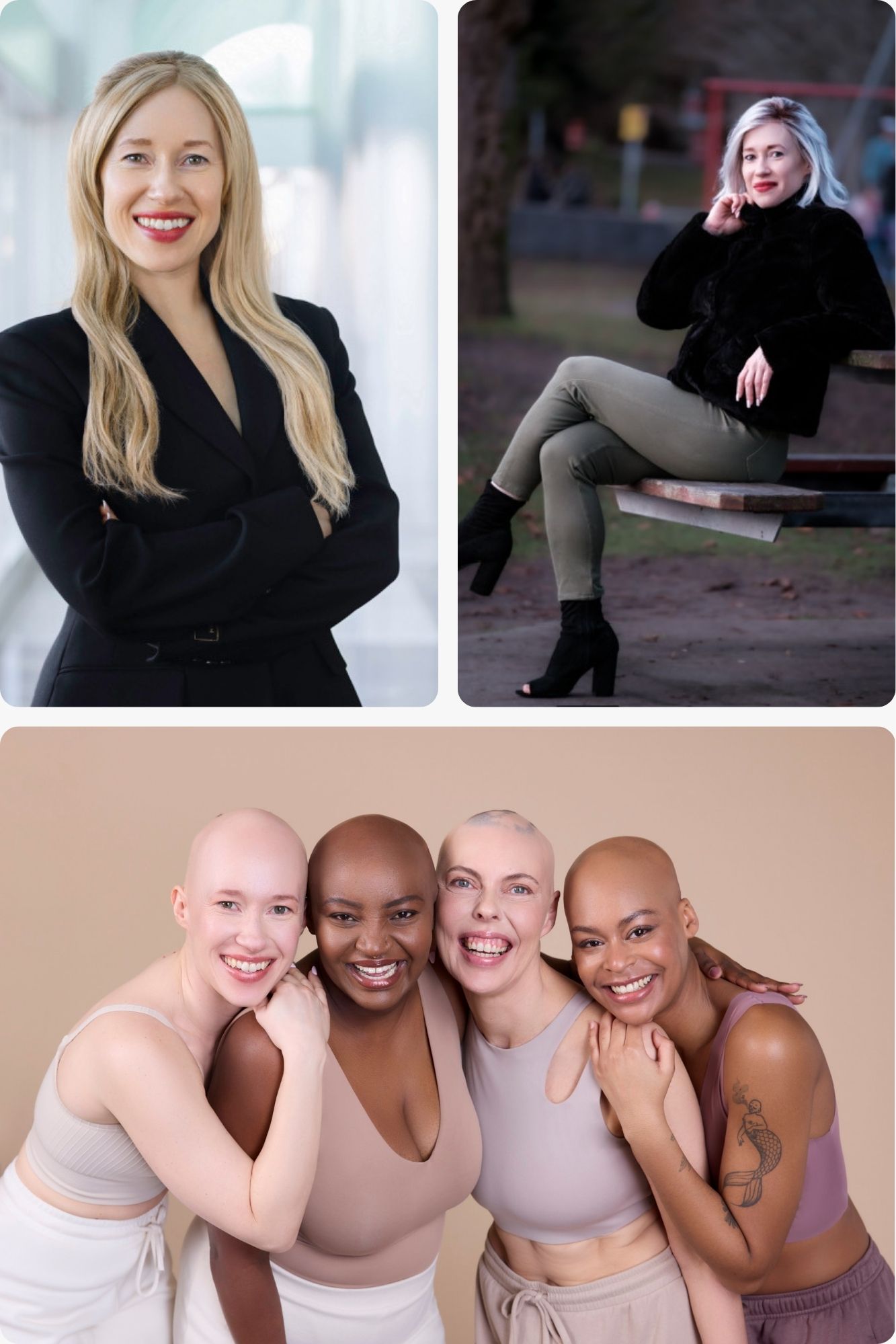
Although Lisa still wears wigs today, she is now open and expressive in how she wears them, while also finding confidence and empowerment in being bald. In 2024, after CANAAF shared a call for people with alopecia areata to take part in a professional photo series that raises awareness for the autoimmune disease, Lisa was selected as a model. Alongside five other people with alopecia, she appeared in a series of images taken by photographer Tilly Nelson, which were captured to challenge the stigma of alopecia and to celebrate its beauty, joy, and sense of community.
“It took quite a while until I got here, but that’s okay,” she says of her journey to self-acceptance with alopecia areata. “Everyone moves at different rates. If anyone is interested in volunteering and being a part of CANAAF, you can always start in small ways. Eventually, you can do more if you want – it all helps.”
To learn more about volunteer opportunities at CANAAF, visit www.canaaf.org/volunteer/.