Alopecia Areata: Cultivating Self-Love and Confidence After Diagnosis
By Laura Schober
For many people living with alopecia areata (AA), the healing journey towards self-love and confidence can take years. AA is a chronic autoimmune disease that results in partial or full hair loss on the scalp and body. The initial diagnosis can lead to anxiety, depression, social withdrawal, shame, and low self-esteem.1 But with the right support and resources, it is possible to find strength – and even empowerment – through your diagnosis.
For Geneviève Brault, a pediatric occupational therapist and Francophone Liaison for the Canadian Alopecia Areata Foundation (CANAAF), the journey to self-love and acceptance took over 20 years. Now 32, she was just nine years old when her mother noticed a toonie-sized bald spot on her scalp. As her hair loss progressed, she was diagnosed with alopecia universalis, a form of AA that results in the complete loss of hair on the scalp and body. Not wanting to wear a wig, Geneviève began wearing scarves to class, quietly navigating a condition that would shape much of her life.
“Kids wanted to pull the scarf away and would say mean things like, ‘You are a girl with no eyebrows’. That was the hardest part. As a kid, I felt like, ‘Can’t I just be normal?’.”
Geneviève’s condition later progressed into alopecia areata, where some of her hair grew back, but she still had some bald spots on her scalp. In high school, Geneviève wanted to forget she had alopecia and would do whatever she could to hide her spots.
“At that time, I wanted to be like everybody,” she said. “I wanted to forget that I had alopecia, I wanted to hide. I was very good at hiding my bald spots.”

The path to self-acceptance
Geneviève says her self-love journey has been a process, which began by following others with alopecia on social media and speaking with different health professionals to process and better understand her condition.
Geneviève has found it motivating and liberating to follow people with alopecia on social media because they look like her. Plus, she can watch social media videos to learn how to put on false eyelashes or do her brows. Over time, she has realized she doesn’t have to hide her condition any longer; her self-worth doesn’t depend on whether she has hair or not.
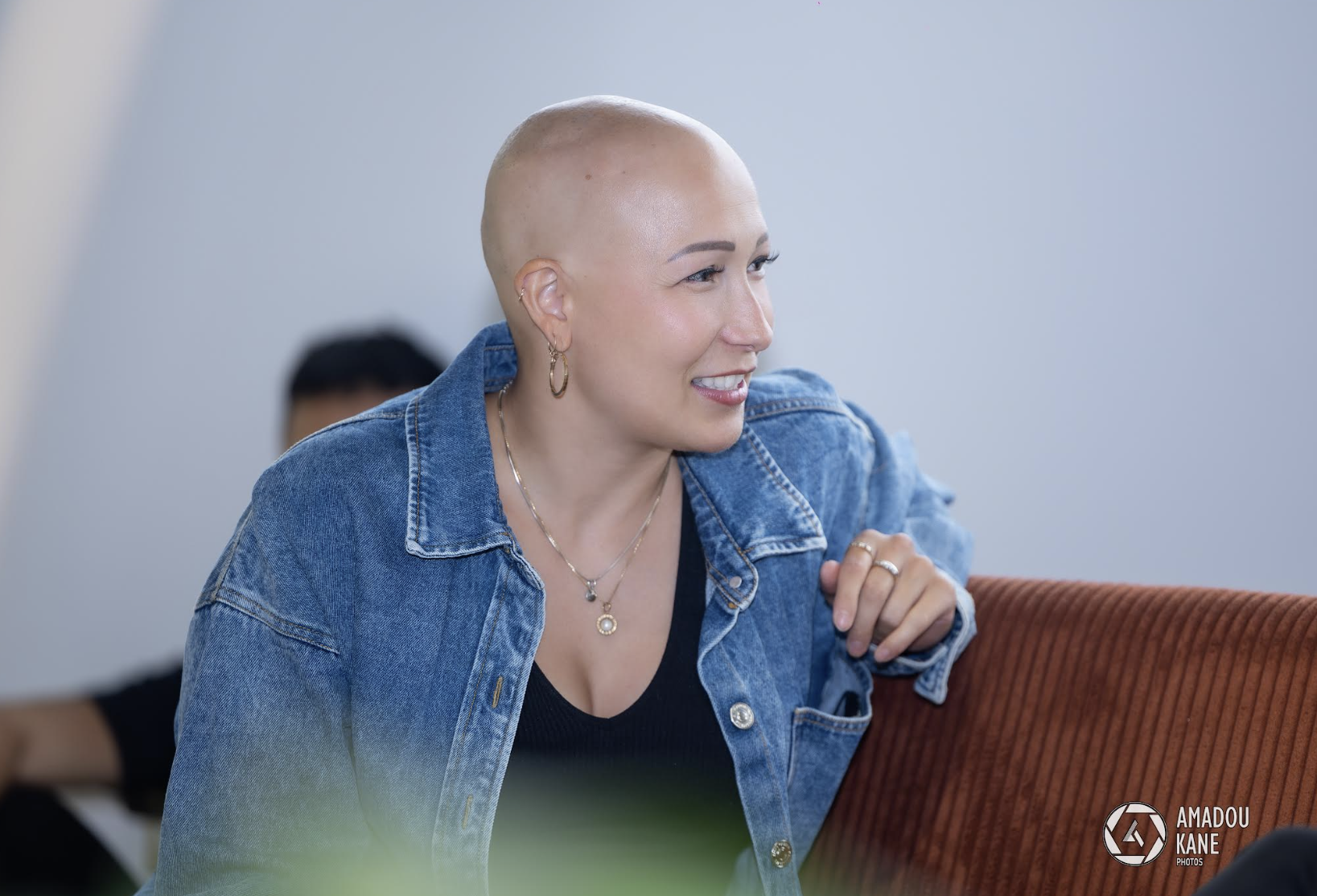
While Geneviève used to always wear a wig at work, she decided to shave her hair off completely in winter 2024. After debuting her new look during the holiday party season, she decided to fully embrace her baldness and now chooses not to wear a wig at work. She says the support from her family, colleagues, and community has been instrumental in her journey to self-acceptance.
Geneviève has also credited her love for dance in empowering her confidence after AA diagnosis. She also recently participated in a photo shoot where she posed without a wig.
“Ultimately, I feel more free when I am bald,” said Geneviève. “I work in oncology with cancer kids so all my kiddos are bald,” she said. “I have young teenagers that are fierce so it gives me the little push that I need. If they can do it, I can do it too.”

Surround yourself with a supportive community
Nicole Smith, 35, a registered psychotherapist living with AA, leads support groups and mental health and wellness presentations for the CANAAF community. Like Geneviève, she says having a supportive community of people around you – especially having people you can talk to about your condition – is important.
Nicole was first diagnosed with AA at age 12. For most of her youth, she had enough hair to hide her bald patches. However, in her early 20s, Nicole began experiencing panic attacks, which led to diagnoses of panic disorder, depression, and anxiety. As her hair loss worsened, she turned to wigs to help her feel like herself again.
“I don’t think I had very many people to talk about with it,” she said of her initial diagnosis. “I spent a lot of time hiding and feeling really ashamed.”
But as she reached her 30s, Nicole says she finally began to gain more confidence and feel more accepting of her condition.
“I think each person already knows what they need to do in order to make themselves feel comfortable in the world, and part of that might be expression through things like clothing,” she said. “There was a time in my life when I was first embracing alopecia at age 30 where I just was like, ‘That’s it. I’m going to get a pink wig and I’m going to really embrace that. I can wear something different.’”
Ultimately, she says the stories that we tell ourselves matter too. “Pay attention to those narratives because they have such an impact deep down on how you view yourself and what is okay and what isn’t,” she said.
Below are 5 tips from Nicole for cultivating self-love and confidence after an alopecia diagnosis.
- Honour Your Unique Journey
Alopecia affects everyone differently: emotionally, physically, and socially. Try not to compare your experience to others and understand your personal journey with alopecia is unique and valid. There’s no “right” way to live with alopecia. - Surround Yourself With Supportive and Inspiring People
Spend time with those who love and accept you for who you are. This might include friends, family, support groups, or others in the alopecia community. Seek out role models, which can include people living openly and confidently with alopecia, to remind yourself that confidence and beauty come in many forms. - Express Yourself Authentically
Use your personal style, creativity, or self-care as ways to reflect your identity. Whether it’s through clothing, accessories, makeup, or art, expressing who you are on the outside can help strengthen your self-image on the inside and make you feel more like you. - Reconnect With Yourself
Hair is just one part of a much bigger picture. Ground yourself in the qualities and passions that define you, such as your sense of humour, your compassion, your talents, and your resilience. When you connect with your core identity, confidence naturally begins to grow. - Develop a Self-Compassion Practice
Be kind to yourself. Living with alopecia can be emotionally challenging, and it’s okay to have hard days. Use affirmations, mindfulness, journaling, or other gentle tools to nurture your inner world and remind yourself that your worth isn’t tied to appearance.
References:
- Gandhi K, Shy ME, Ray M, Fridman M, Vaghela S, Mostaghimi A. The Association of Alopecia Areata-Related Emotional Symptoms with Work Productivity and Daily Activity Among Patients with Alopecia Areata. Dermatol Ther (Heidelb). 2023 Jan;13(1):285-298. doi: 10.1007/s13555-022-00864-1.