
After a diagnosis of alopecia areata, having a close support network is key. However, when someone is newly diagnosed, it can be difficult for family members, caregivers, and friends to know what to say or how to offer their support.
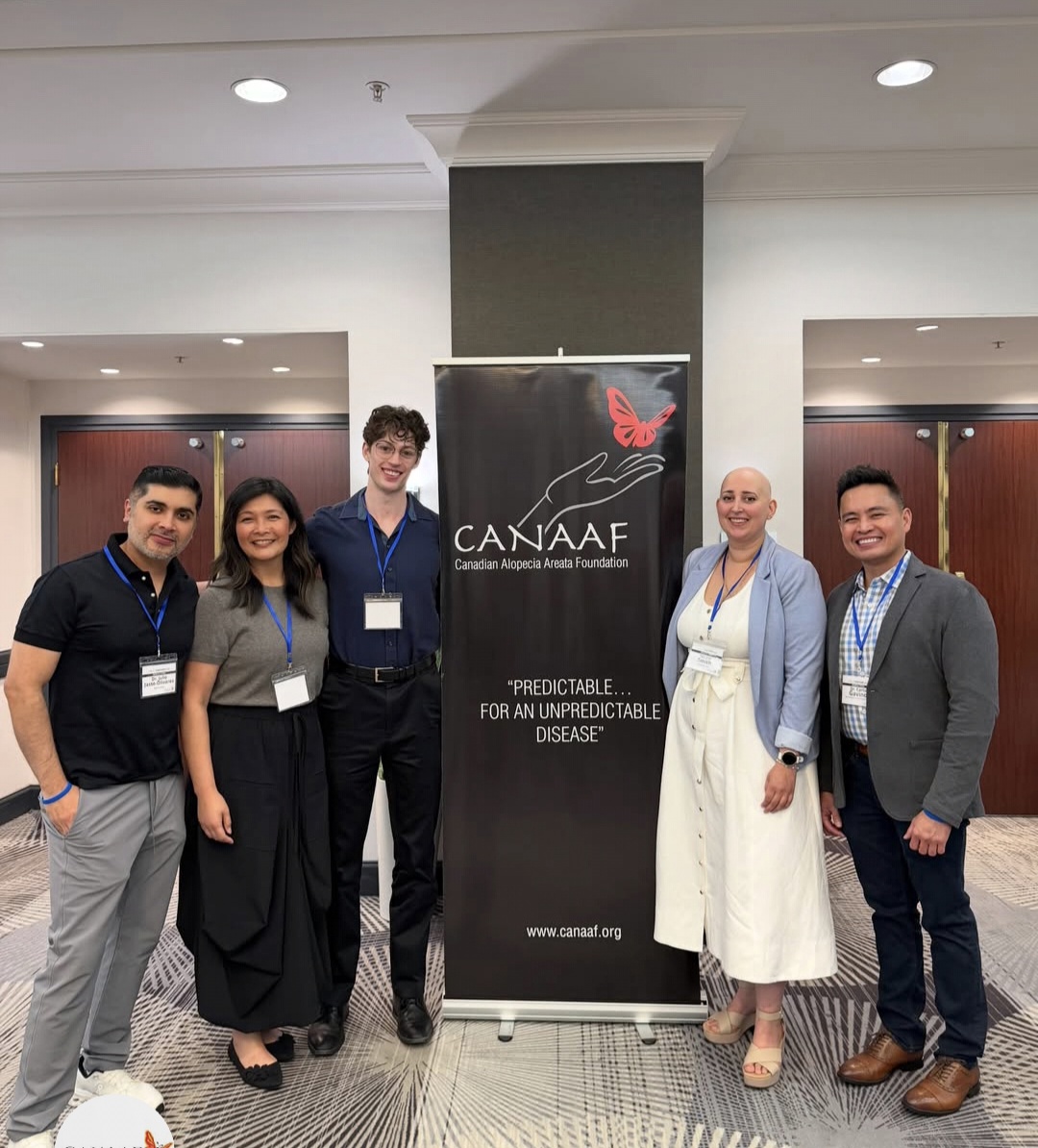
To learn more about how family and friends can best support their loved ones with alopecia areata, CANAAF spoke with psychotherapist Nicole Smith. With a focus on the mind-body connection, Nicole brings an empathetic approach to therapy that’s shaped by her own lived experience with alopecia totalis. Through her work, she aims to empower others to find their own path towards healing, self-acceptance, and self-compassion. Read our Q&A with Nicole below.
1) How can families, caregivers, and partners create a safe, non-judgmental, and accepting home environment for someone living with alopecia areata?
One of the biggest mistakes loved ones make is trying to “fix the problem”. Reassurance, positivity, or unsolicited coping advice can unintentionally communicate that difficult feelings about alopecia areata are not okay. Instead, allow your loved one to grieve. Often, simply sitting with someone in their pain is more healing than trying to change it.
It is also important for caregivers and family members to manage their own fears. Worries about bullying, dating, confidence, or social rejection are understandable, but projecting anxiety onto a loved one can unintentionally communicate that alopecia areata is shameful or catastrophic. People living with alopecia areata benefit most from a calm, grounded, and supportive presence.
Finally, acceptance means respecting autonomy. Some people want openness and conversation; others want privacy. Some wear wigs or scarves; others do not. The goal is not to push someone towards confidence, but to help them feel accepted wherever they are emotionally.
2) How can loved ones support the confidence and emotional well-being of someone who has been newly diagnosed with alopecia areata?
Alopecia areata can feel deeply identity-altering. Hair often carries meaning connected to gender, culture, attractiveness, and self-expression. Emotional support is not about helping someone “get over it”, but about helping them feel emotionally safe while adjusting to a version of themselves they may not yet recognize.
It is important to remember that emotions around alopecia areata are rarely linear. Someone may feel okay one week and devastated the next after new hair loss or a difficult social interaction. This is not backsliding, but is part of the grieving process. Loved ones can help by creating space for honest emotions without trying to minimize or fix them. Sometimes the most healing response is simply: “That makes sense.”
It can also help to encourage connection to the parts of identity that still feel meaningful and stable. Supporting hobbies, relationships, humour, creativity, work, parenting, or passions can remind someone they are still a full person beyond their hair loss.
3) What are some common comments or questions that can unintentionally hurt or offend someone with alopecia areata? What are better phrases to say instead?
Many hurtful comments come from discomfort, curiosity, or attempts to reassure. Even well-meaning remarks can leave someone feeling minimized or emotionally alone.
Examples include:
- “At least it’s not cancer.”
- What to say instead: “I can see this is really hard for you.”
- “It’s just hair.”
- What to say instead: “I imagine this affects a lot more than appearance.”
- “You’re still beautiful.”
- What to say instead: “I care about you and I’m here with you.”
- “Have you tried…?” followed by unsolicited advice
- What to say instead: “Would you like support, advice, or someone just to listen?”
- “I could never handle that.”
- What to say instead: “You’ve been carrying a lot.”
It is also important to respect boundaries around questions. Many people with alopecia areata become exhausted from constantly discussing or explaining their appearance. Curiosity is natural, but no one is entitled to someone else’s medical or emotional story.
4) What are some signs to watch out for that indicate someone with alopecia areata may need additional support?
It is normal for people with alopecia areata to experience grief, insecurity, anger, embarrassment, or anxiety, especially after diagnosis or significant hair loss changes. Additional support may be needed if emotional distress begins affecting daily functioning or quality of life.
Some signs to watch for include:
- Persistent sadness, hopelessness, or loss of interest in previously enjoyed activities
- Social withdrawal or isolation
- Avoiding school, work, relationships, or public spaces because of shame or anxiety
- Significant changes in sleep, appetite, or energy
- Excessive appearance-related distress or mirror checking
- Intense anxiety about being seen without hair coverings
- Expressions of worthlessness or feeling “unlovable”
- Difficulty functioning day-to-day because of emotional distress
Support from a therapist – especially one who is familiar with chronic illness, body image, or identity changes – can be incredibly helpful.
5) What are some realistic coping strategies that can help people with alopecia areata manage the emotional effects of hair loss?
There is no single “right” way to cope with alopecia areata. For many people, healing involves emotional processing, self-compassion, connection, and rebuilding a sense of identity beyond hair loss.
Some helpful coping strategies can include:
- Allowing yourself to grieve rather than forcing positivity
- Connecting with supportive communities or others with alopecia areata
- Setting boundaries around intrusive questions or unwanted advice
- Working with a therapist to process shame, anxiety, or identity changes
- Exploring wigs, scarves, makeup, microblading, shaving, or going uncovered based on personal comfort
- Staying connected to hobbies, values, relationships, and meaningful parts of identity
- Limiting comparison to others online or in real life
- Gradually facing feared situations at your own pace rather than avoiding them entirely
- Remembering that acceptance is usually an ongoing process, not a single moment